
Virgin Atlantic
Virgin Atlantic
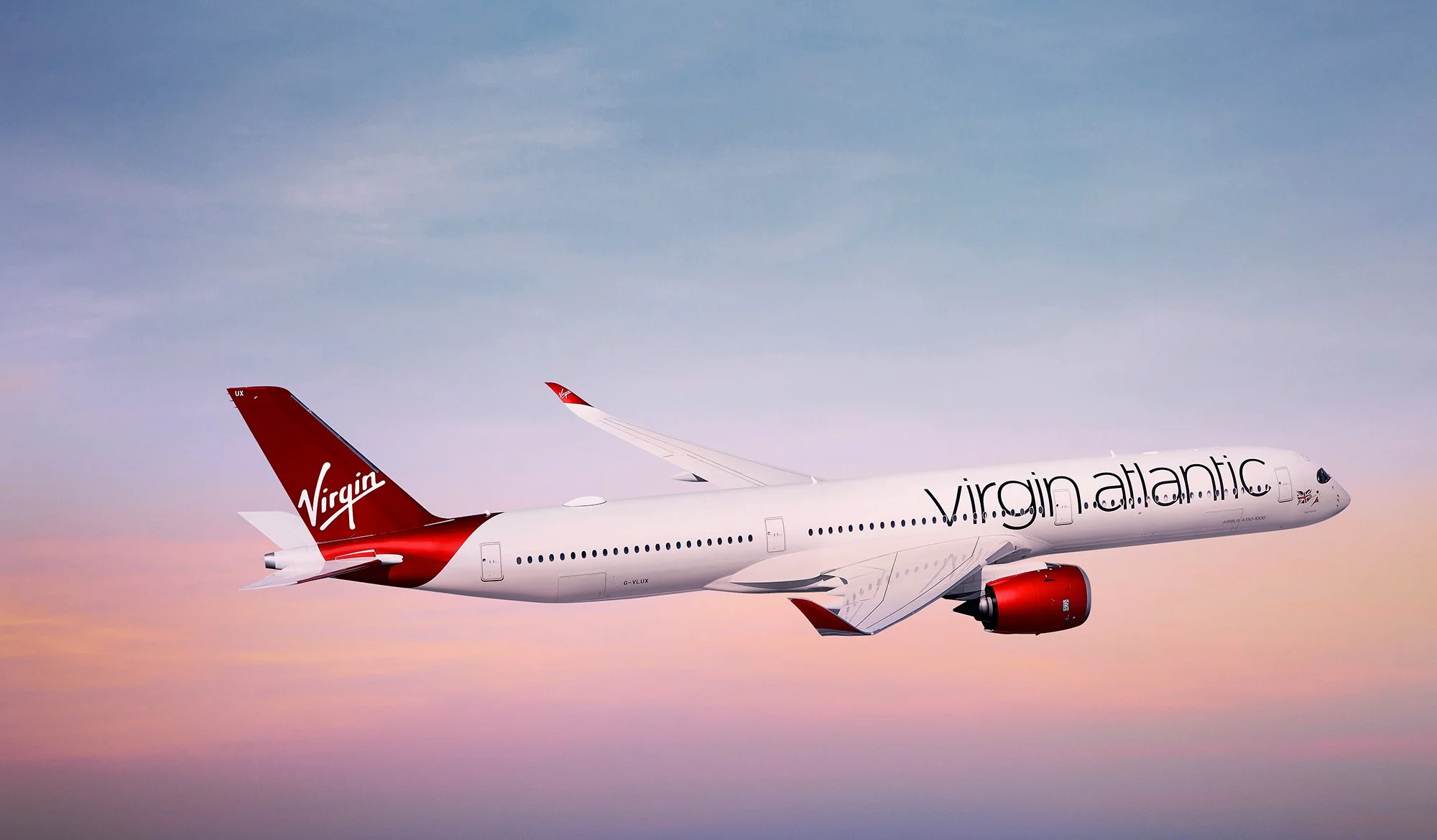
Building one of aviation's most distinctive brands
Every airline says it's different. Almost none of them are.
Strip away the liveries, the uniforms and the advertising, and the industry runs on the same handful of promises: seamless journeys, premium service, rewarding loyalty, and exceptional experiences. The words have become interchangeable because the thinking behind them is.
It's the strange paradox at the heart of modern aviation. Airlines have never invested more in differentiation, and passengers have never had fewer reasons to care who gets them from A to B. When a low-cost carrier and a flag carrier both call themselves premium, the word stops meaning anything.
I spent nearly two years working on the Virgin Atlantic brand, and the thing I find most interesting about it isn't the product, the advertising, or even the experience itself.
It's that the business made a decision about what it wanted to mean to people, and then spent decades reinforcing that decision.
Virgin Atlantic never tried to win by having the biggest network or even the best product. It chose to compete somewhere much harder to copy: in what travel made possible for the people who flew with them. No matter who you are, who you love, or where you go, Virgin Atlantic empowers you to take on the world, and to see it differently.

See the world differently with Virgin Atlantic.
Product advantages rarely last. Clear ideas do.
Airlines spend millions trying to differentiate through product. The problem is that product differentiation alone rarely lasts. Every product advantage eventually becomes table stakes.
British Airways introduced Club Suite, and soon enough everyone had a better business class seat. Delta pioneered integrated digital experiences, and others followed. Products have half-lives. Meaning compounds.
Clarity beats likability every time.
Take Ryanair. People love to complain about Ryanair. But they still fly with them. While everyone is trying to make flying pleasant and provide better service, Ryanair just thrives on making everything consistently miserable for you.
Why? Because they have one goal. To convince you that they're the cheapest airline in Europe. So when you think "cheap flights", you think Ryanair. Everything about the airline reinforces the same core idea, from the pricing to the service model to the communication style, and even Michael O'Leary himself. Clarity beats likability every time.
Virgin Atlantic succeeds for exactly the same reason. The two airlines are opposites operationally, but identical strategically. Both made a choice, and committed to it relentlessly.
Now think about the airlines caught in the middle. Affordable premium. Premium value. Elevated experiences. Award-winning service. The language changes slightly, but the proposition rarely does. They're trying to be too many things, and end up being none of them.
Worse, they create expectations their business model struggles to sustain. Position yourself as an affordable premium airline and customers expect premium service. But if the business isn't built to deliver that consistently, you're forced to unbundle, cut back, or compromise somewhere else. The result is an experience that feels increasingly disconnected from the story you're telling.
The airlines that win don't have better products. They have fewer, better ideas, reinforced consistently.
And that's the part most people miss about brand. They think it's the campaign, the storytelling, the way a company presents itself. But brand is the underlying strategic choice that makes all those expressions coherent.

Policy is one of the things that reveals a company's true priorities.
True brand building shapes everything the business does
Once a company decides what meaningful role it wants to play in people's lives, thousands of other decisions get easier. What you build. What you stop building. How you hire, how you serve, how you design, what you say no to.
Policy is one of the things that reveals a company's true priorities, because policy costs money, alters workflows, and introduces risk. When Virgin Atlantic allowed visible tattoos and fluid uniforms, it risked alienating conservative flyers. It accepted that risk because its identity as an enabler of self-expression mattered more than universal appeal.
Advertising, by contrast, is safe. It can be bought, tested in focus groups, and cancelled if it underperforms. It requires no change to the underlying machinery of the business.
Virgin Atlantic's approach works because its internal decisions align with its external promise. By encouraging its crew to bring their full, unscripted selves to work, it gives passengers implicit permission to do the same.
And customers feel the difference immediately. Passengers stop comparing ticket prices based on seat pitch or legroom alone. They choose the airline based on how the journey makes them feel. When operational disruptions inevitably happen, people are far more forgiving of brands they trust than brands they merely tolerate.
Especially brands that claim to put people first while programming their customer service bots to stall, loop, and deflect. Or loyalty programmes that call you valued while quietly reducing the value of your points.
Virgin Atlantic's advantage was never that it promised more. It was that the promise held up when you actually experienced it. Competitors can easily copy a sleek new business class seat or a clever ad slogan. They cannot easily copy a decade of policy decisions that prioritise cultural freedom over rigid corporate conformity.
Distinctiveness requires protection
There was a period during my time at Virgin Atlantic when the brand became increasingly playful and decorative in its expression. The work was beautiful and creatively ambitious, but gradually the expression became more about aesthetics than the underlying idea. It looked distinctive. It just didn't look or feel distinctly Virgin Atlantic.
That's the danger even the most successful brands face. Nobody wakes up and decides to dilute a brand. It happens through reasonable decisions made by talented people pursuing good ideas that simply aren't anchored to the same truth. The work of building a distinctive brand isn't inventing something new every year. It's protecting something true from the constant pressure to make it bigger, bolder, sharper.
The later evolution towards the See the World Differently brand platform wasn't a campaign. It was a return to strategic clarity.
And it didn't just show up in the big, visible decisions. It showed up in places most people would never think to look. Take destination imagery, which sounds like one of the least strategic things an airline does.
Every airline needs photographs of the places it flies to, and almost every airline reaches for the same ones: the skyline, the landmark, the sunset beach, the postcard shot you've already seen a hundred times. Beautiful, functional, and completely interchangeable. You could replace one airline's image library with another's and most passengers wouldn't notice.
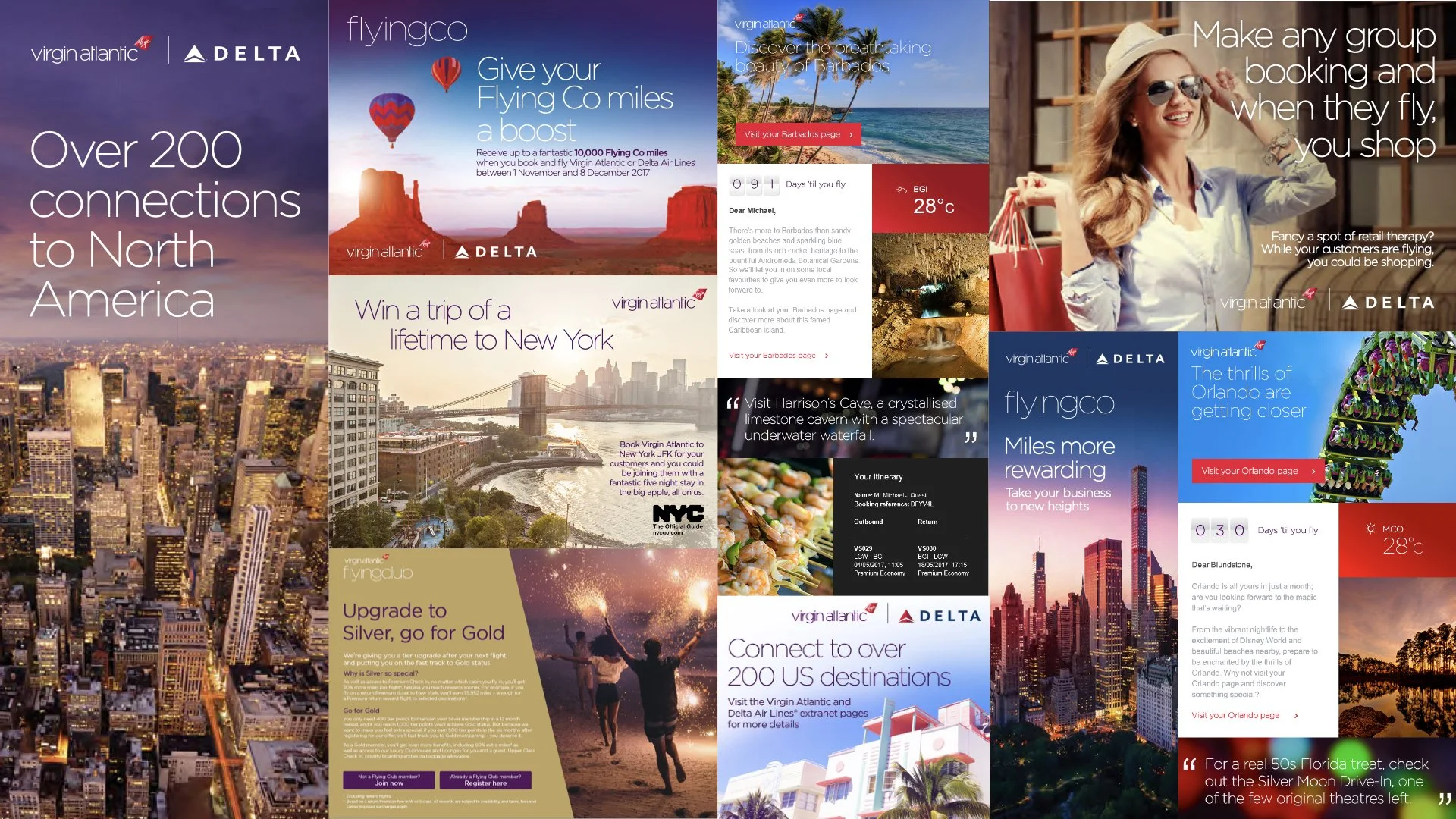
Before: destination imagery that could have belonged to almost any airline.
When I developed the art direction principles for destination imagery, I asked a simple question: if the brand is about seeing the world differently, why are we showing the world exactly like everybody else? That question eliminated most travel photography immediately. Instead, I looked for unexpected perspectives, reflections, unusual framing, familiar places captured in unfamiliar ways. Images that created intrigue rather than simply documenting a destination, and always, somewhere, a presence of red.
The objective wasn't to make the photography more beautiful. It was to make it unmistakably Virgin Atlantic. Distinctiveness doesn't live in campaigns. It lives in thousands of small decisions that all point in the same direction, and that's where brands either hold together or quietly fall apart.



Distinctiveness doesn't live in campaigns. It lives in thousands of small decisions.
