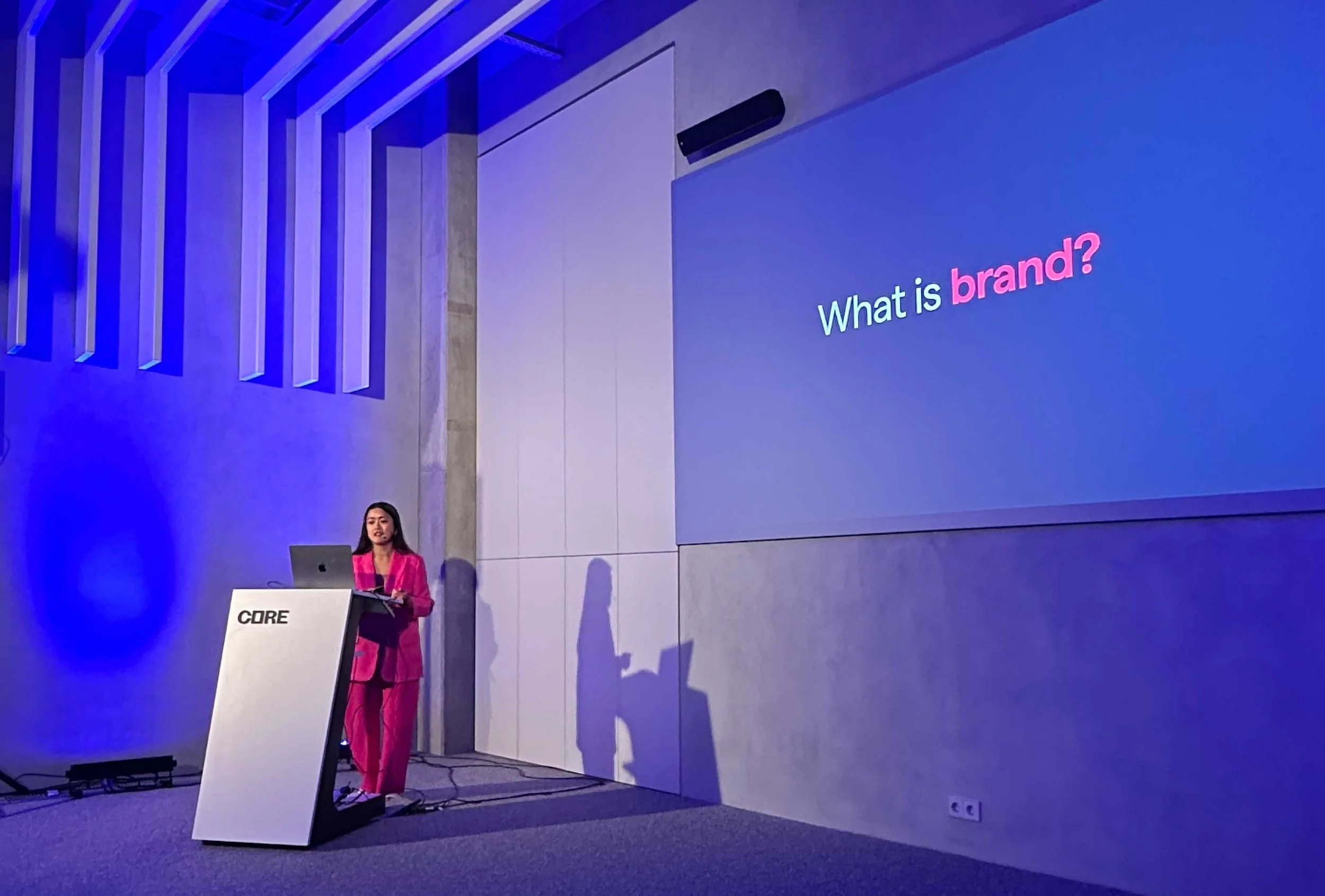
What is brand? Jeff Bezos famously defined brand as "what people say about you when you're not in the room." I’d argue that your reputation. A start-up launching tomorrow already has a brand, whether or not anyone recognises it yet. Reducing brand to other people's opinions misses what it actually is.
Others think a brand is a name, a logo, or a trademark. But those are identifiers, not the brand itself. When Apple dropped "Computer" from its name in 2007, the company didn't become a new brand. It simply acknowledged that the idea behind the business had always extended beyond desktops. The brand remained identical. The name just caught up with it.
Some define brand as image or message. But that implies you can design a brand separately from what you actually do. Anyone who has tried soon discovers it's unsustainable. Customers eventually discover the gap between what a company says and what it delivers. Once they do, messaging loses credibility fast.
When people ask me to define brand, I say:
Brand is the core idea a business is built around, made explicit across the organisation so decisions and actions reinforce it consistently.
Most companies operate from a different assumption. You have a product, you start a company, you build a brand to help sell it.
And if you build a great brand, like Apple, Nike, or Airbnb, you'll sell more. That logic makes sense, it just limits what brand can do, because it assumes it's your brand's job to sell the product.
It isn't.
It's not your brand's job to sell your product. It's your product's job to sell your brand.
Swedish furniture giants IKEA is a great example. They didn't design furniture and then try to elevate it through branding. IKEA began with a core idea: a better everyday life for the many people. What matters isn't the statement, but how deeply it shapes what the company decides.
Most furniture companies design a product and then work out what price they can charge. IKEA starts with the price – what would put good design within reach of most people – and designs backwards until it does.
Flat-pack construction reduces transportation and storage costs. Self-service lowers operating costs. Modular systems make products easier to manufacture, transport, and adapt over time. These weren't isolated innovations. They were consequences of a single idea applied consistently across the business. The brand wasn't layered on top of the company. It shaped how the company was built. That's an entirely different way of building a business.
Great brands aren't about what you say. They're about how you build.
Most brand work focuses on expression rather than operations: what the company says, how it presents itself, what story it tells. It produces the most visible outputs: the new identity, the refined messaging, the campaign that lands well. And on its own, it rarely creates lasting advantage. The work gets louder as it gets less coherent.
What people think about a company is shaped by every interaction they have with it: the product, the sales conversation, the support experience, the way problems get handled when things go wrong. No amount of messaging can compensate for inconsistency between what a company says and what it delivers.
The companies that build the most durable brands start with a clear idea of what the business is built around, then embed that idea into how the company operates rather than simply how it communicates. The brand isn't declared. It accumulates as a consequence of the business delivering on what it promised.
The question that matters isn't "how do we want to be perceived?" It's "are we building a business that does what we claim?" The first question produces messaging. The second produces a brand.
Where it starts to cost
I've walked into companies where the founding team could articulate exactly what the business was built around, while the hundredth hire described something subtly but materially different. That gap is where things start to cost more than they should.
The most common symptom is activity that doesn't compound. Teams are working hard. Content is being produced. Campaigns are running. But growth becomes more expensive instead of more efficient, and nobody can quite name why.
The reason is usually the same: the core idea driving the business hasn't been defined clearly enough to guide decisions consistently. So every team develops its own reasonable interpretation. Marketing explains it one way. Sales promises another. Product builds toward something else entirely. Everyone is working hard. But everyone is working for different companies.
When clarity is missing, the fix tends to be more activity. More meetings. More messaging. More explanation. All of it is reasonable, but none of it compounding. Alignment becomes dependent on constant explanation. That gap between the idea the company was built around and what it actually does, day to day, decision by decision, is the thing that quietly raises the cost of everything. And it doesn't show up as a crisis. It shows up as friction nobody can quite describe.
When the idea does its job
Decisions get easier, because the basis for making them is shared. Trade-offs get clearer. New hires understand what they're building and why. Product, sales, hiring, operations and leadership start reinforcing one another instead of competing for direction. Marketing improves because it coheres, not because it gets louder. Growth compounds instead of fragmenting.
At that point brand isn't one department's responsibility. It's the logic the whole business runs on, the thing that makes every other decision easier to make and harder to undo. It's rarely built this way, because it asks for a level of clarity most companies assume they have until they test it.
The test is simple. Can every person in your business, in product, in sales, in hiring, in finance, answer the same question about what you're building and why? Not in the same words. With the same idea. If the answers diverge, that's where the work starts. •