STHREE
Making Virgin Atlantic red hot again.

SThree was already mid-transformation when I joined as Head of Design. A rebrand was underway The situation
A FTSE-listed company. A rebrand already in motion. A brand world waiting to be completed.
SThree is one of the few global businesses that specialises entirely in STEM talent — connecting engineers, scientists, developers and mathematicians with organisations across 14 countries. The scale is serious. The ambition was too.
When I joined, a rebrand was already underway. The parts existed — a name, a palette, a direction. What was missing was the connective tissue: a core idea that would make the system hold together and give the brand somewhere to go. A FTSE-listed company operating in 14 markets needs more than elements. It needs a world.
The brief wasn't to make SThree look different. It was to make STEM professionals finally feel seen.
SThree is a FTSE-listed company operating across 14 countries. Serious scale. But looking at the brand at that point, you wouldn't know it. The recruitment sector is full of safe blue brands and stock photography — corporate, emotionally flat, and largely invisible to the people it most needs to reach: STEM professionals who could work anywhere, for anyone.
The candidate was missing. The human was missing. The brand talked about STEM talent without ever making a STEM professional feel seen.
When I arrived and looked at what had been built, I understood why they needed someone like me. The work had parts — a name, a logo, a colour palette, a photography concept. But it was missing the thing that makes a brand system actually work: a connecting idea. The elements didn't flow from a single conviction. They sat next to each other without adding up to anything.
SThree is a FTSE-listed company operating across 14 countries. Serious scale. But looking at the brand, you wouldn't know it. The recruitment sector is full of safe blue brands and stock photography of people shaking hands in offices. SThree was sitting comfortably in the middle of that world — corporate, emotionally flat, and invisible to the people it most needed to reach: STEM professionals who could work anywhere, for anyone.
The candidate was missing. The human was missing. The brand talked about STEM talent without ever making a STEM professional feel seen.
Bold. Human. Unlike anyone else in the sky.
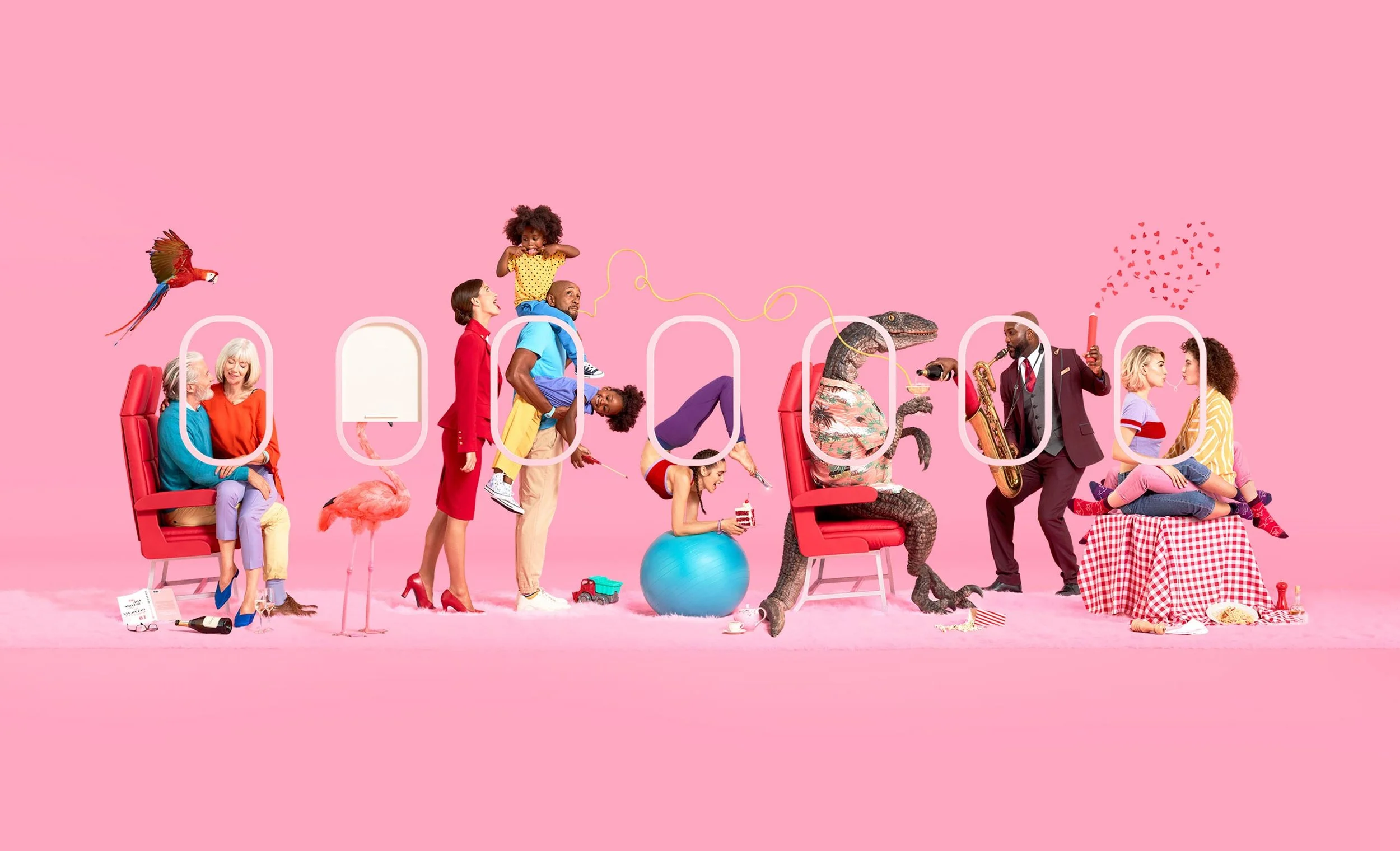
Virgin Atlantic is Britain’s second-largest carrier and one of the most recognisable brands in the air. But in recent years, the brand had lost clarity – visual inconsistencies, conflicting signals, and a palette that had drifted toward pink with the launch of the new brand platform Depart the Everyday, quietly moving red away from the prominence it had always held.
The brand tracking had confirmed what some of us already sensed: the visual language, and red – the brand's most distinctive asset – had drifted far enough that customers were beginning to misattribute the brand for competitors.