Ryanair
Ryanair.
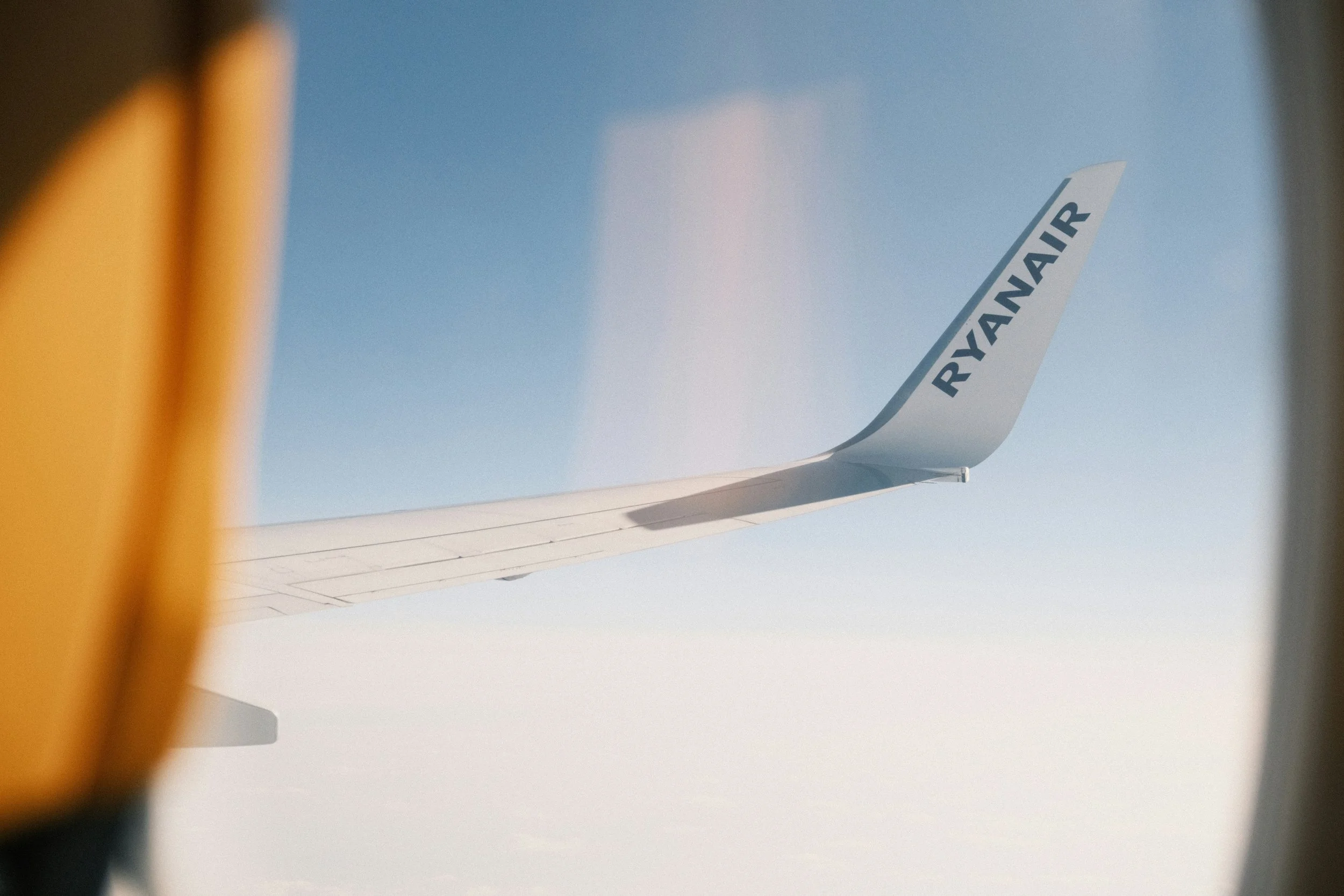
Cheap flights, no more, no less
I hate Ryanair.
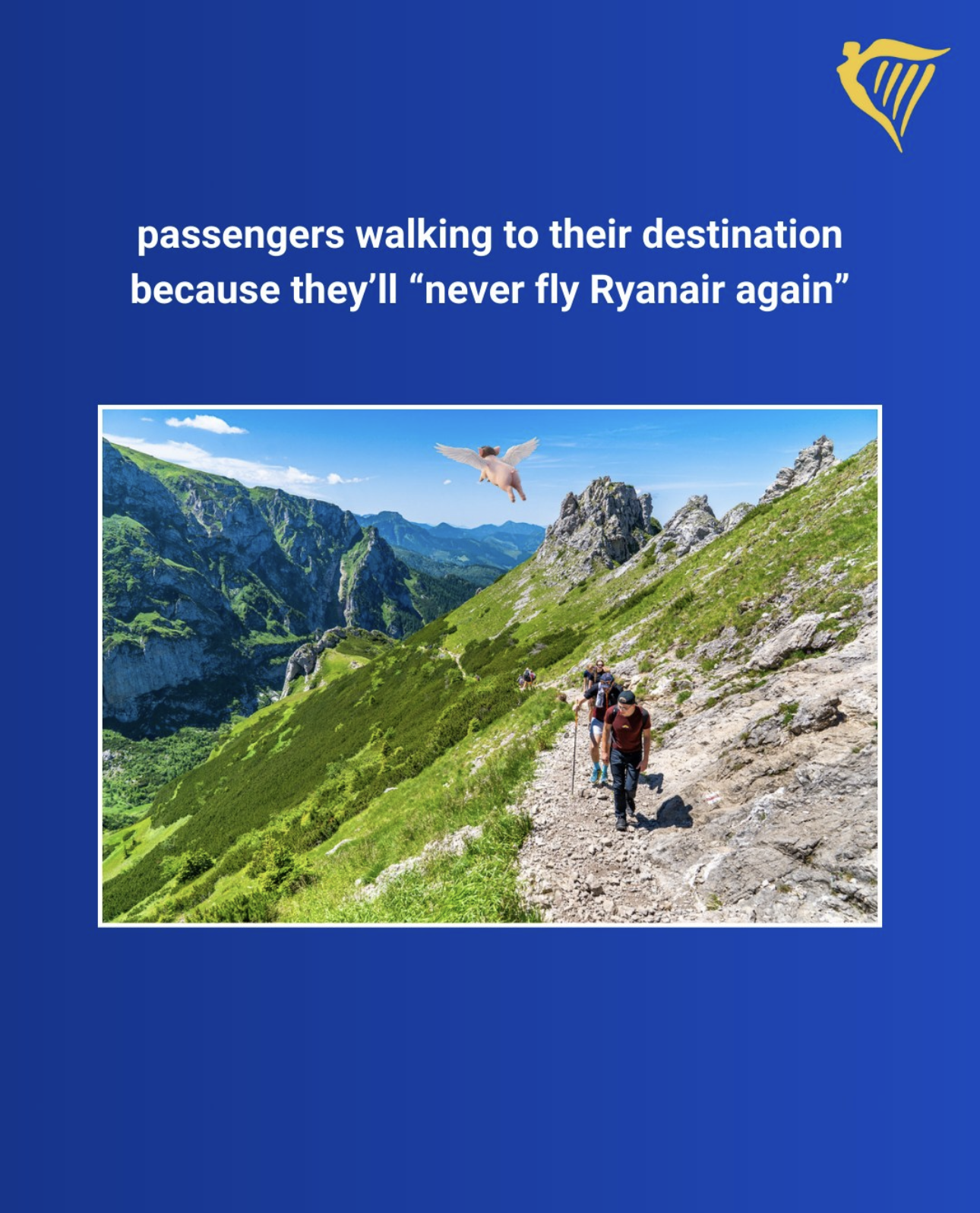
I also fly with them. Every year, more than once. If you're reading this in Europe, there's a decent chance you do too.
While most airlines compete by making flying more comfortable, more enjoyable or more premium, Ryanair has spent decades stripping the experience back to its absolute minimum and charging for almost everything beyond the seat itself. The result is an experience that millions of people actively dislike, yet continue to choose.
Why is that?
Ryanair doesn’t really care if you like them. They care if you believe them. They have one goal, and one goal only: to convince you they're the cheapest airline in Europe. So when you think cheap flights, you think Ryanair.
Their strategy is deceptively simple. To act cheap.
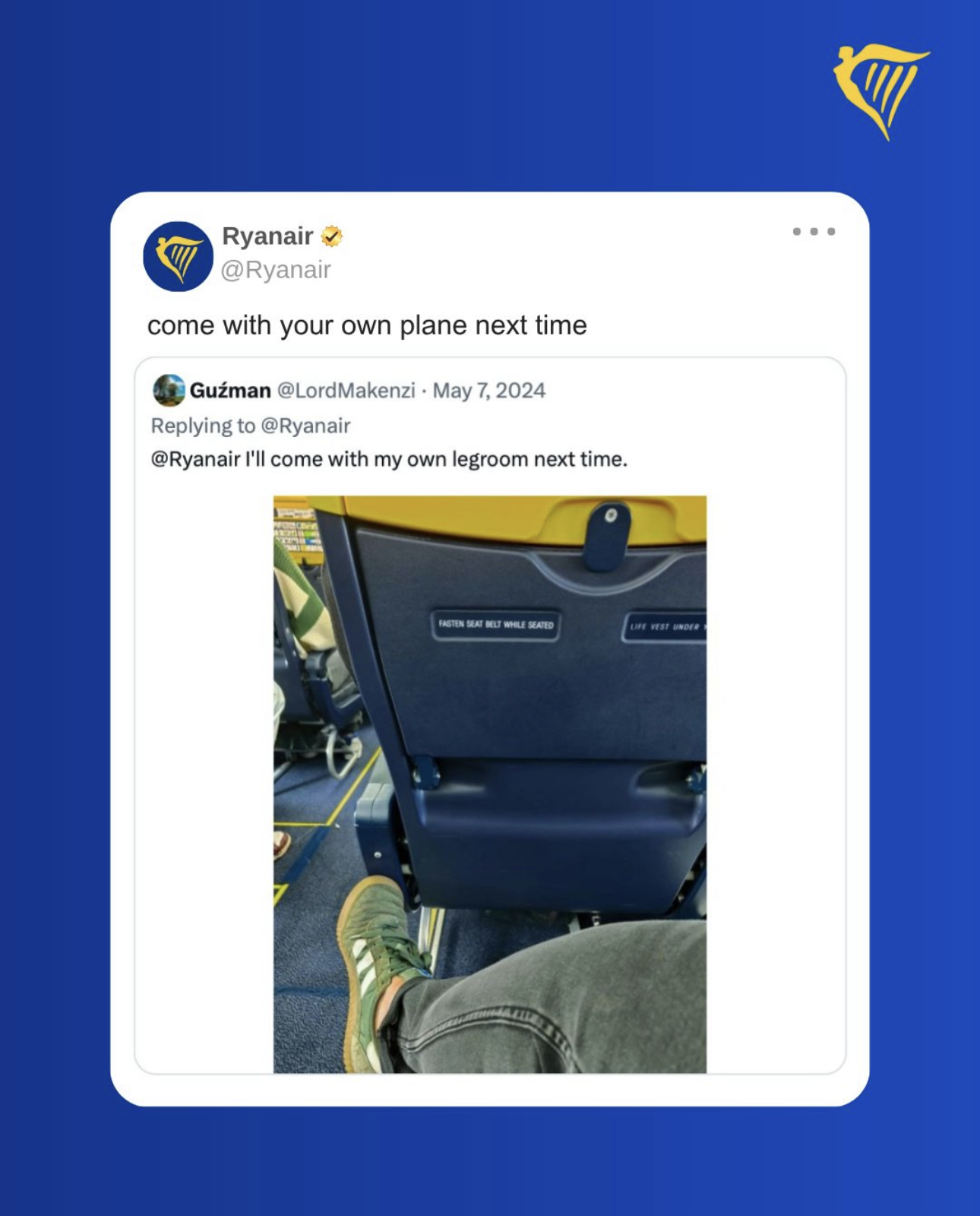
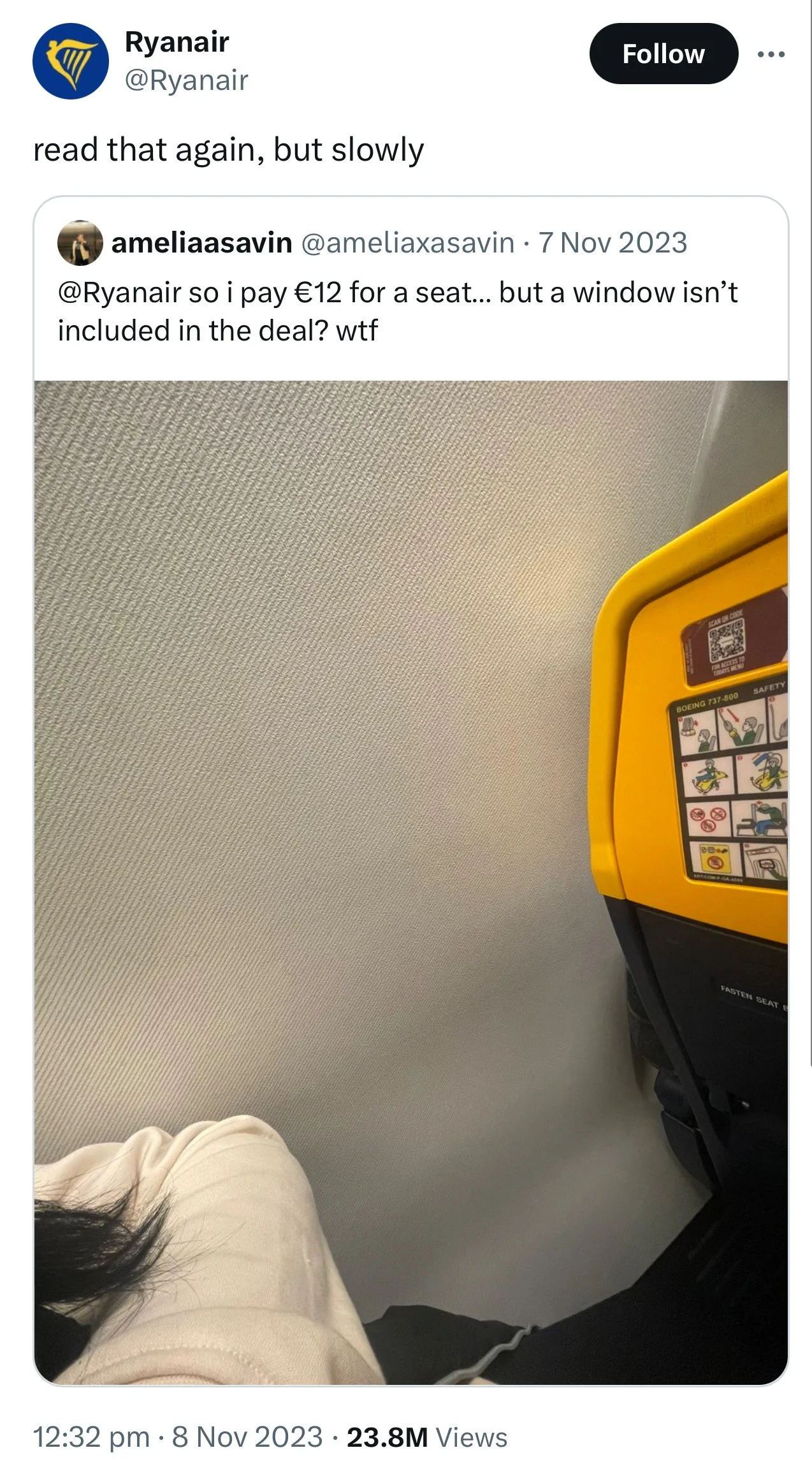
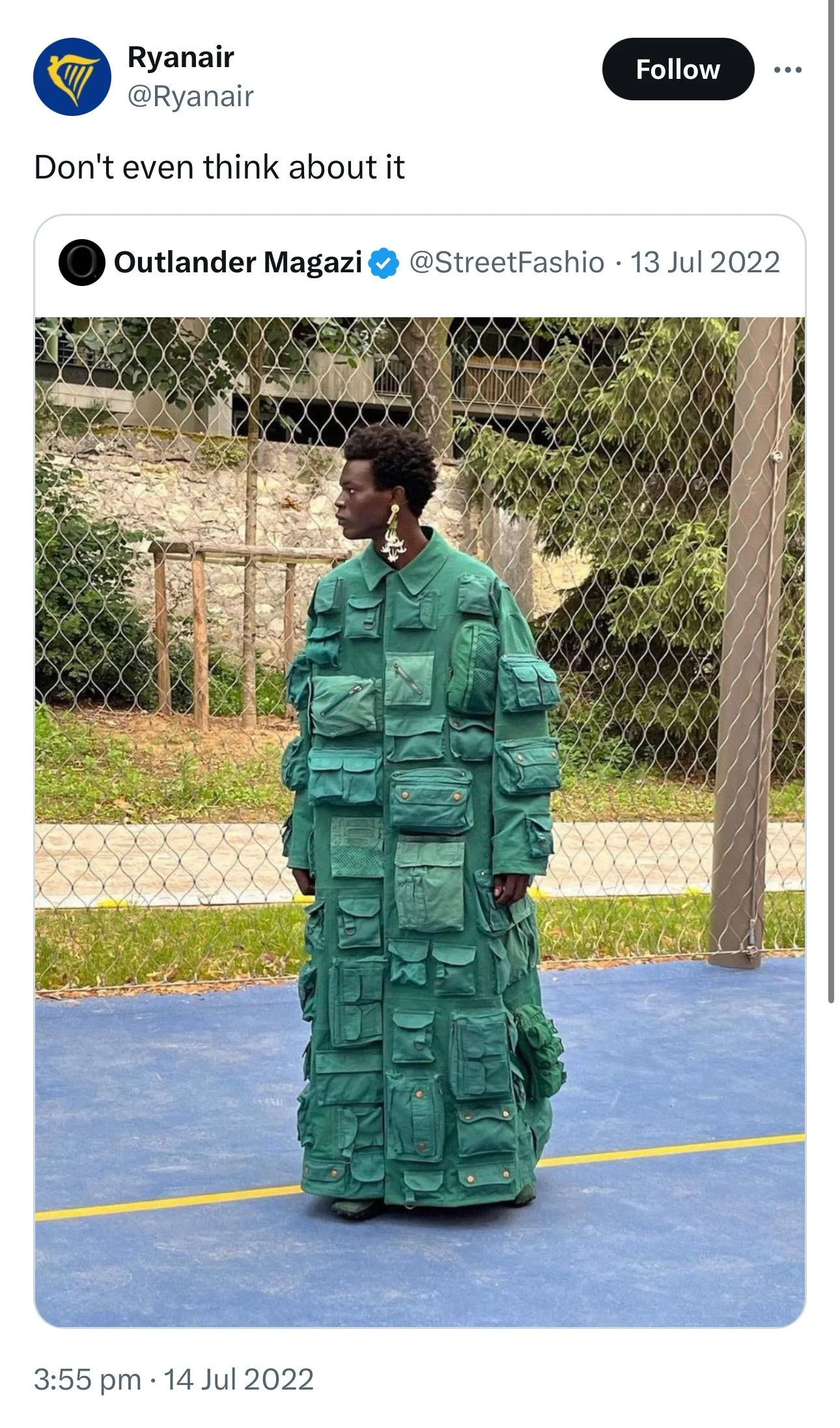
They take you to an airport 60 miles from your actual destination, and make you walk on the tarmac in the rain to save on airport fees. Want to check a bag? Pay. Want to sit next to your family? That'll cost you.
But none of that matters. Because the £19.99 fare has already done its job before you've even booked. Every subsequent extra fee feels smaller because it is measured against the bargain you think you've already secured.
Ryanair's success isn't an anomaly. It's discipline. They've built an unmistakable business because they understand something many companies don't:
Every action you take is either on strategy, or off strategy.
Ryanair promises cheap flights, no more, no less. Every inconvenience, every additional fee and every operational compromise reinforces that promise.
Ryanair doesn't really care if you like them. They care if you believe them.
Good ideas. Bad strategy.
It’s nothing new that businesses often try to optimise for two conflicting things at once: low cost and high service. Ryanair understands that you cannot do both. To win, you must be willing to make trade-offs.
Would customers prefer complimentary baggage? Almost certainly. Would they enjoy more legroom? Of course. Would removing ancillary fees improve the experience? Without question.
Viewed individually, they're all good ideas.
Viewed strategically, they're terrible ones.
This is where many businesses lose their distinctiveness, through hundreds of individually sensible decisions that slowly pull them away from what made them different in the first place.
From the outside, Ryanair often looks like it's doing everything wrong. That's precisely why it's getting everything right. Every time a customer complains about an inconvenience, Ryanair's leadership views that as proof of their business model. Ryanair is routinely named one of the least-liked airlines in the UK, yet carries more passengers than any other European airline.
Ryanair doesn’t disappoint
When you pay £30 to fly across Europe, you expect compromises in exchange for a lower fare. Those inconveniences don't feel like disappointments: they feel like part of the deal. Ryanair promised a cheap flight, no more, no less, and they delivered exactly that.
Imagine exactly the same bare-bones experience on British Airways. If you pay £400 to fly BA and you're charged extra to sit next to your family, you feel cheated. The reality fell short of your high expectations. Passengers paying a premium fare expect exceptional service, reliability, and an elevated travel experience. Those aren't optional extras; they are the product.
Yet, faced with the rapid growth of low-cost carriers, British Airways began unbundling its short-haul economy fares. They stopped offering free tea, coffee, and snacks. They started charging extra for seat selection and checked bags. They kept the premium price tag, but copied the budget experience. The decisions made financial sense. They just stopped feeling like British Airways.
Every action you take is either on strategy, or off strategy.
Honesty beats false promises
The ultimate proof of BA's identity crisis can be found by a quick search on Google. Simply search "BA flights to Italy" and you will see British Airways come up top with "Cheap flights to Italy... Book now with BA."
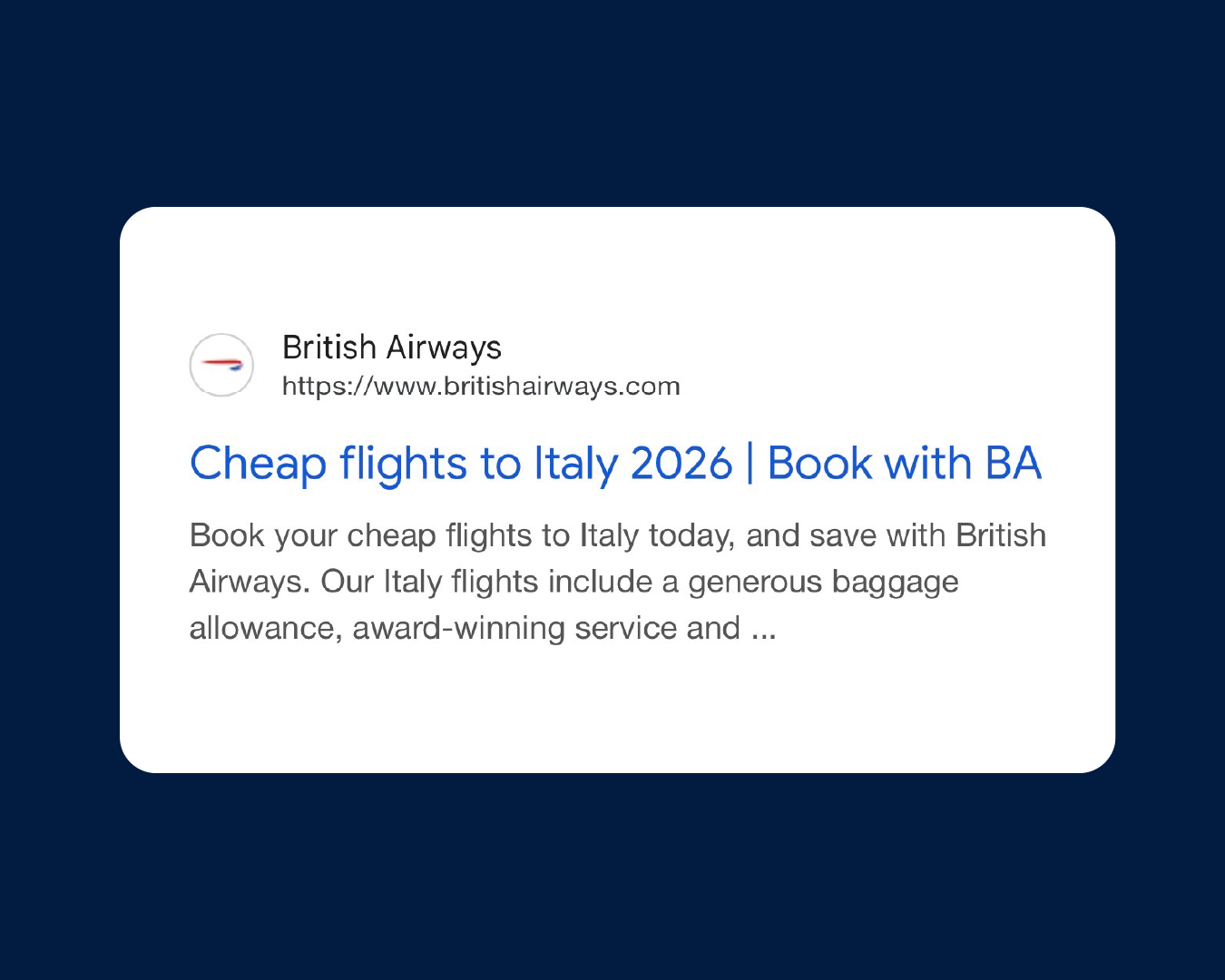
The words you choose shape the expectations customers bring with them.